
Making Elderberry Ink
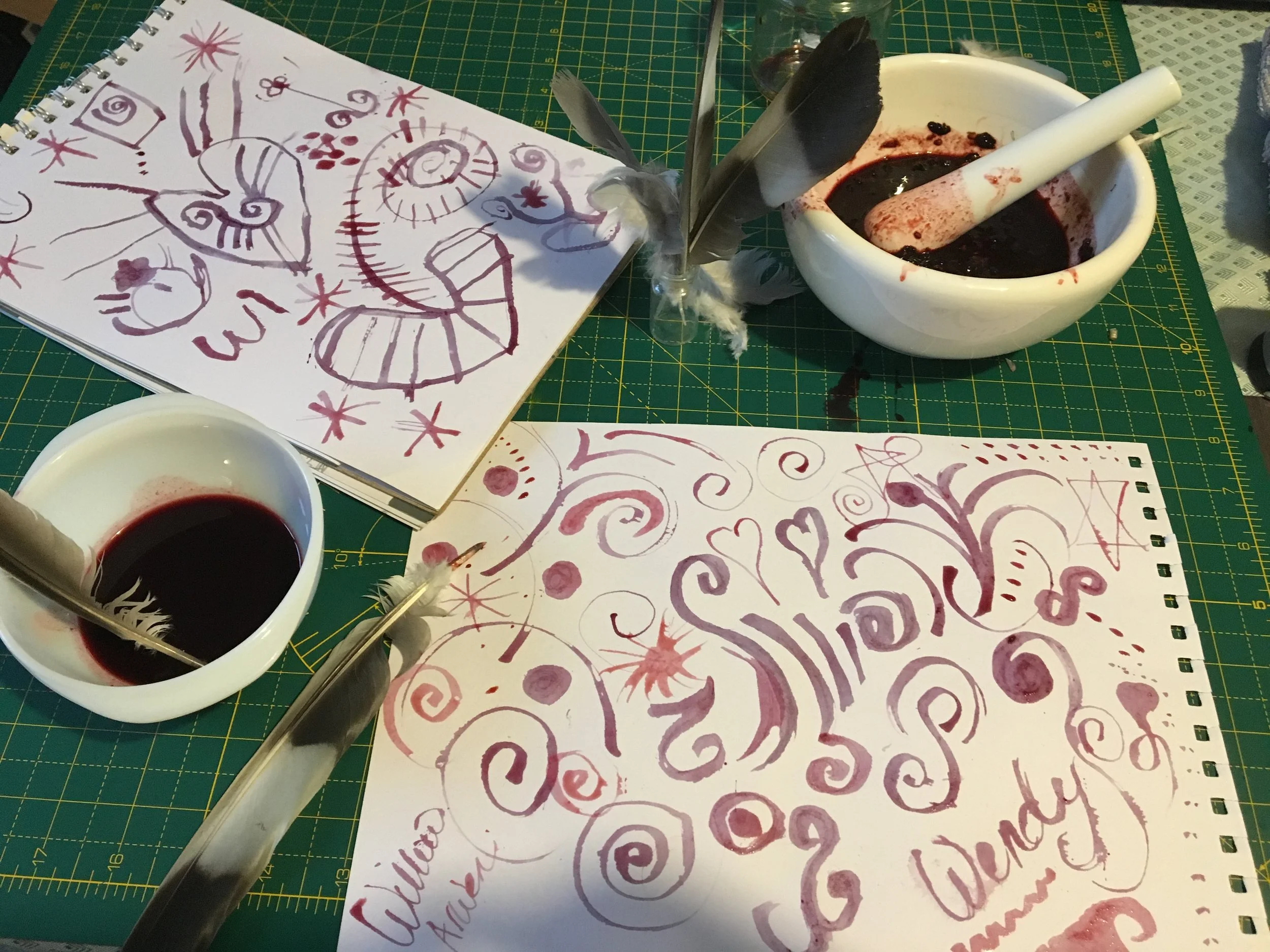
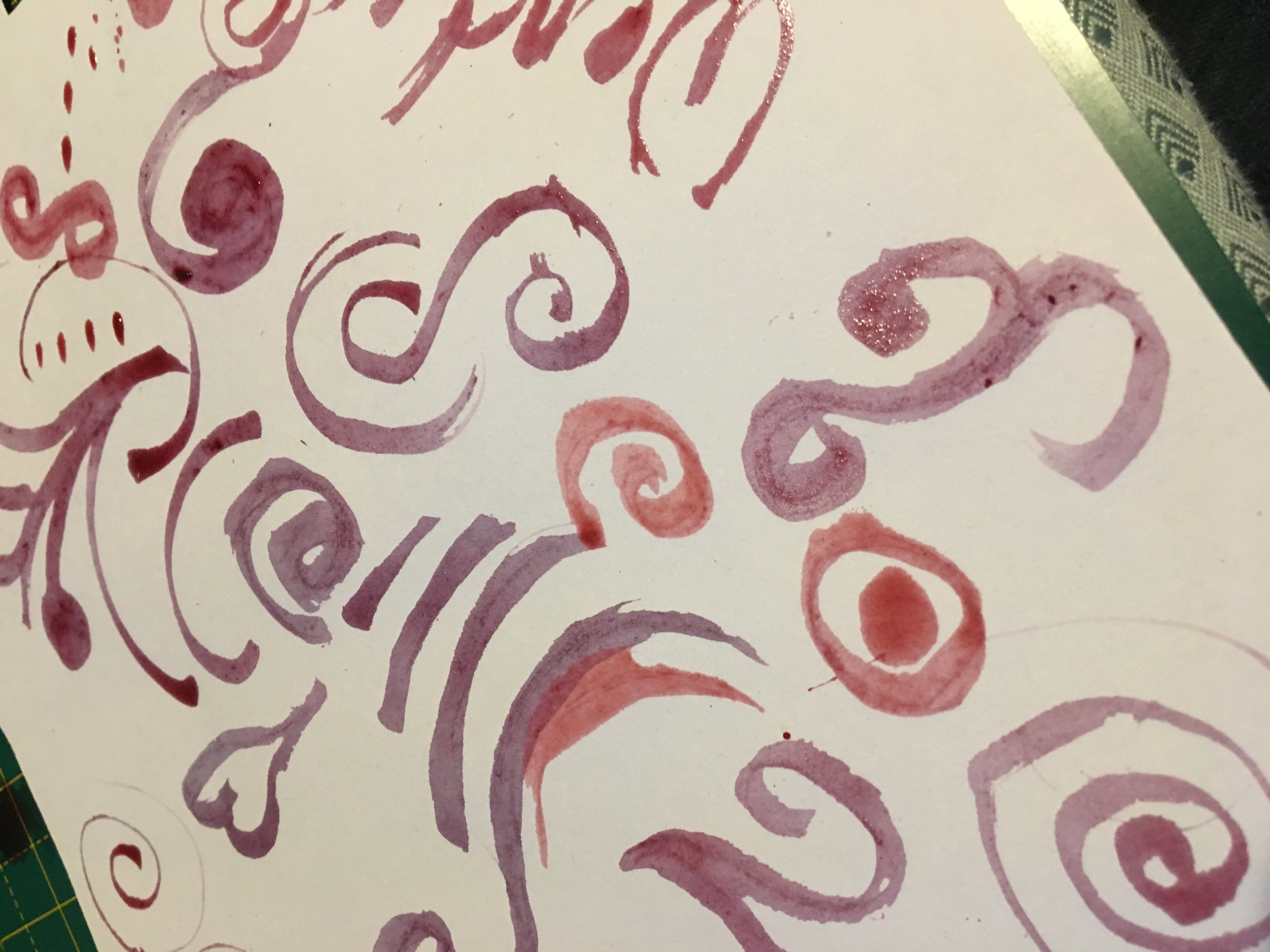
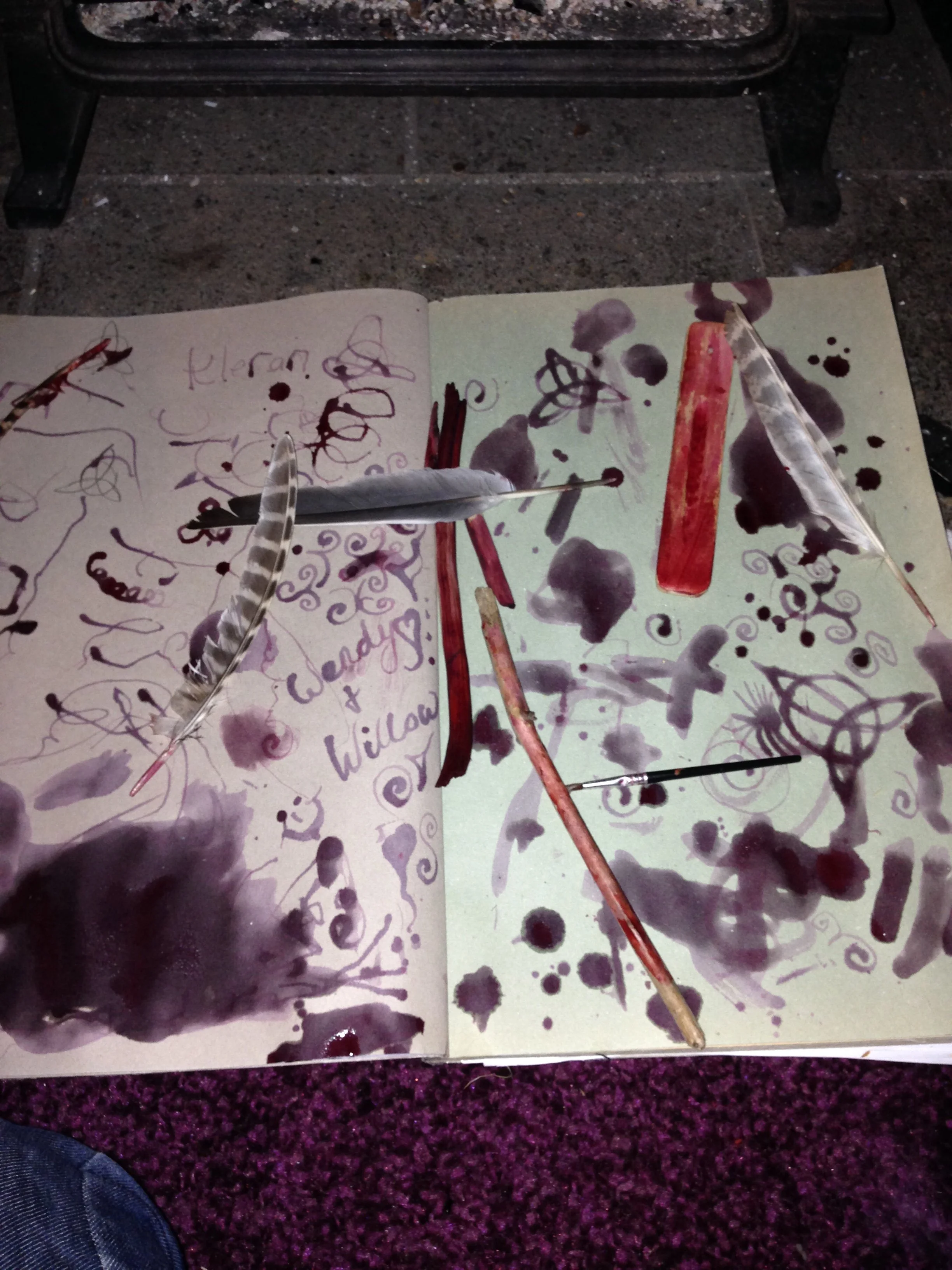
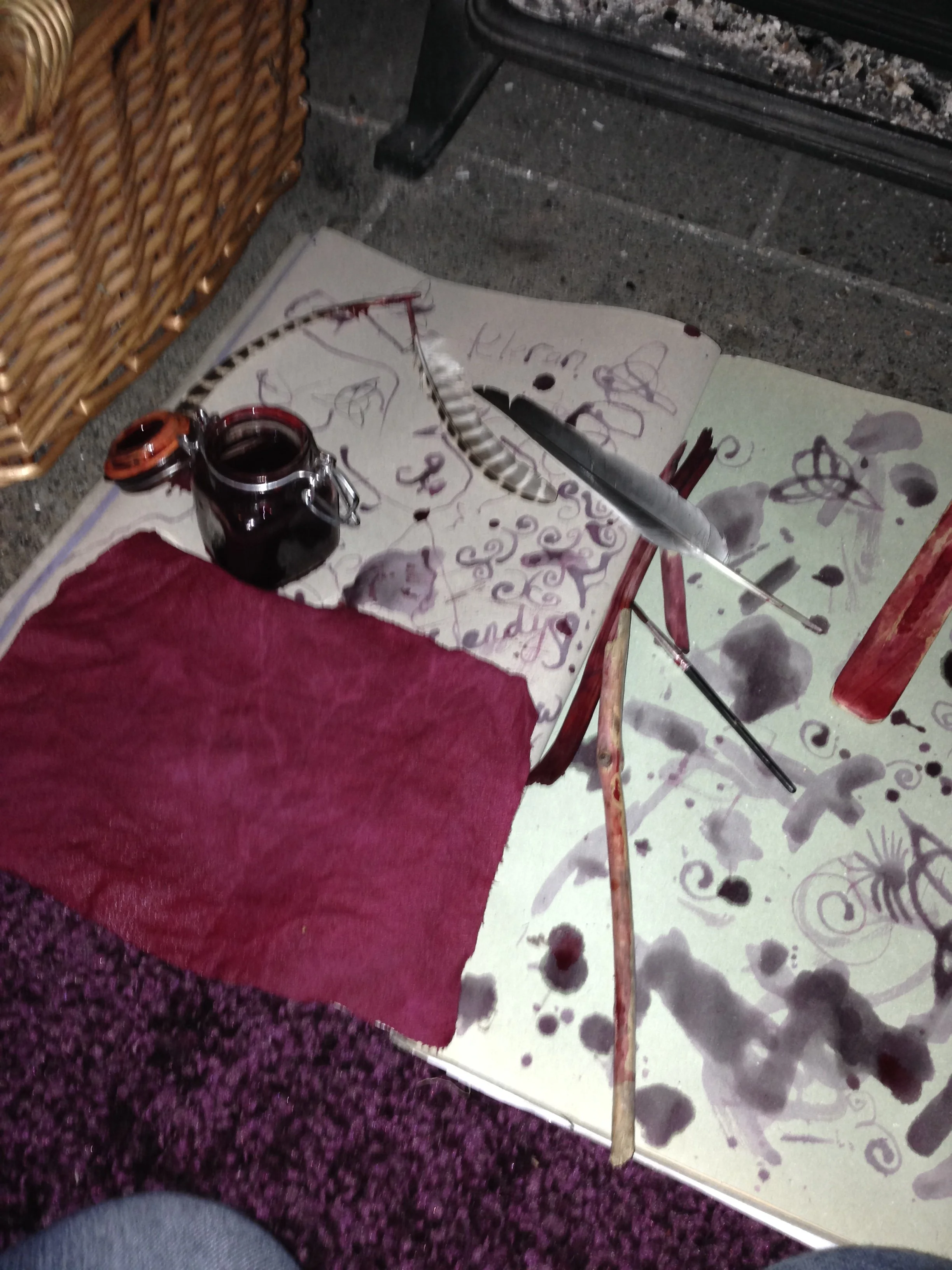
Elderberry ink, handmade quills and nature-inspired drawings on a table, showing the process of creating art from gathered berries.
There is something rather magical about making your own ink from something that has grown in the hedgerows.
Elderberries are such a familiar sight towards the end of summer — little clusters of dark berries hanging amongst the leaves, waiting to be gathered. This time, instead of simply using them in the kitchen, we decided to turn some of our harvest into ink.
It was a wonderfully simple process, and one that gave us plenty of opportunity to slow down, experiment and see what happened.
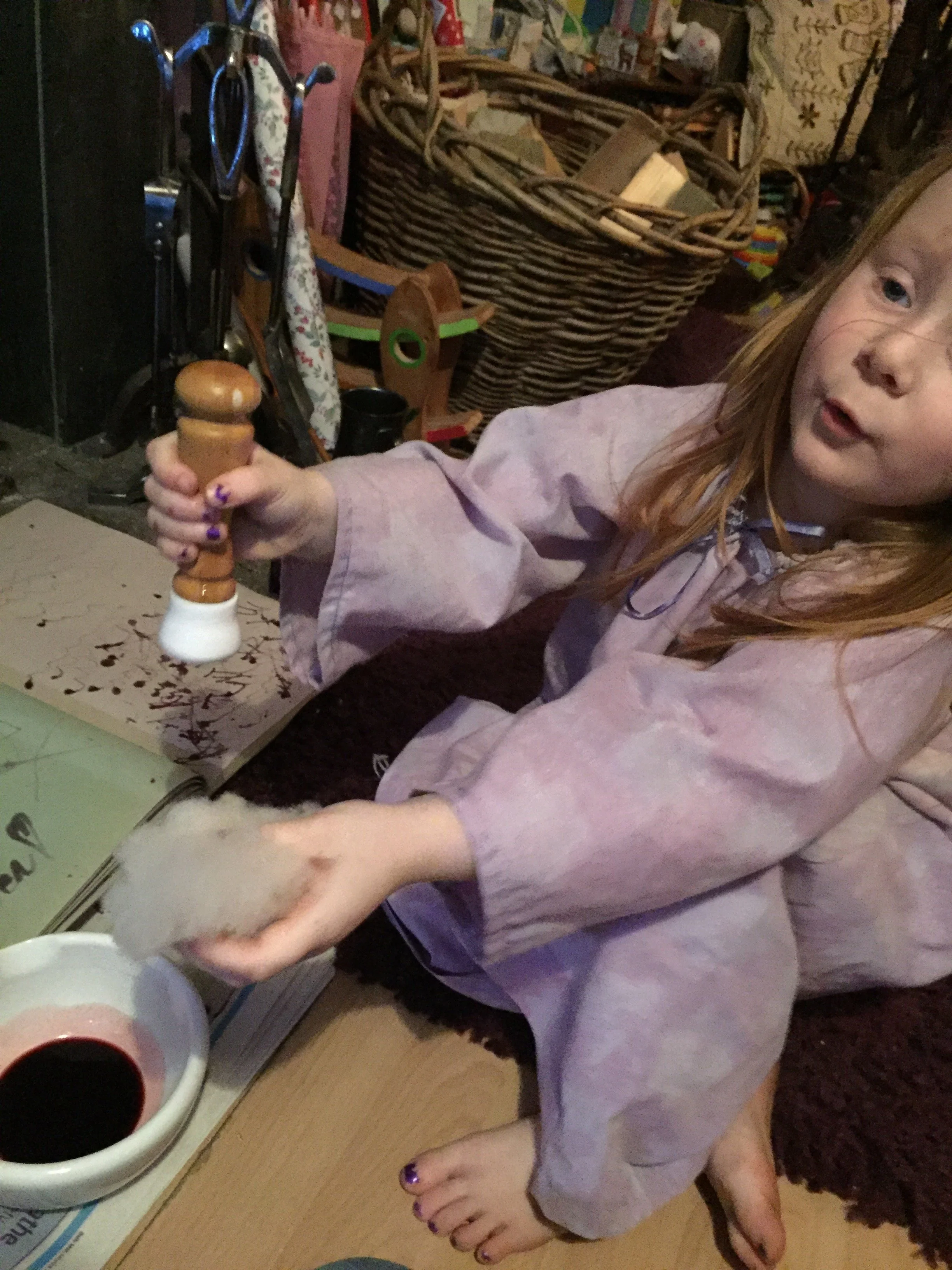
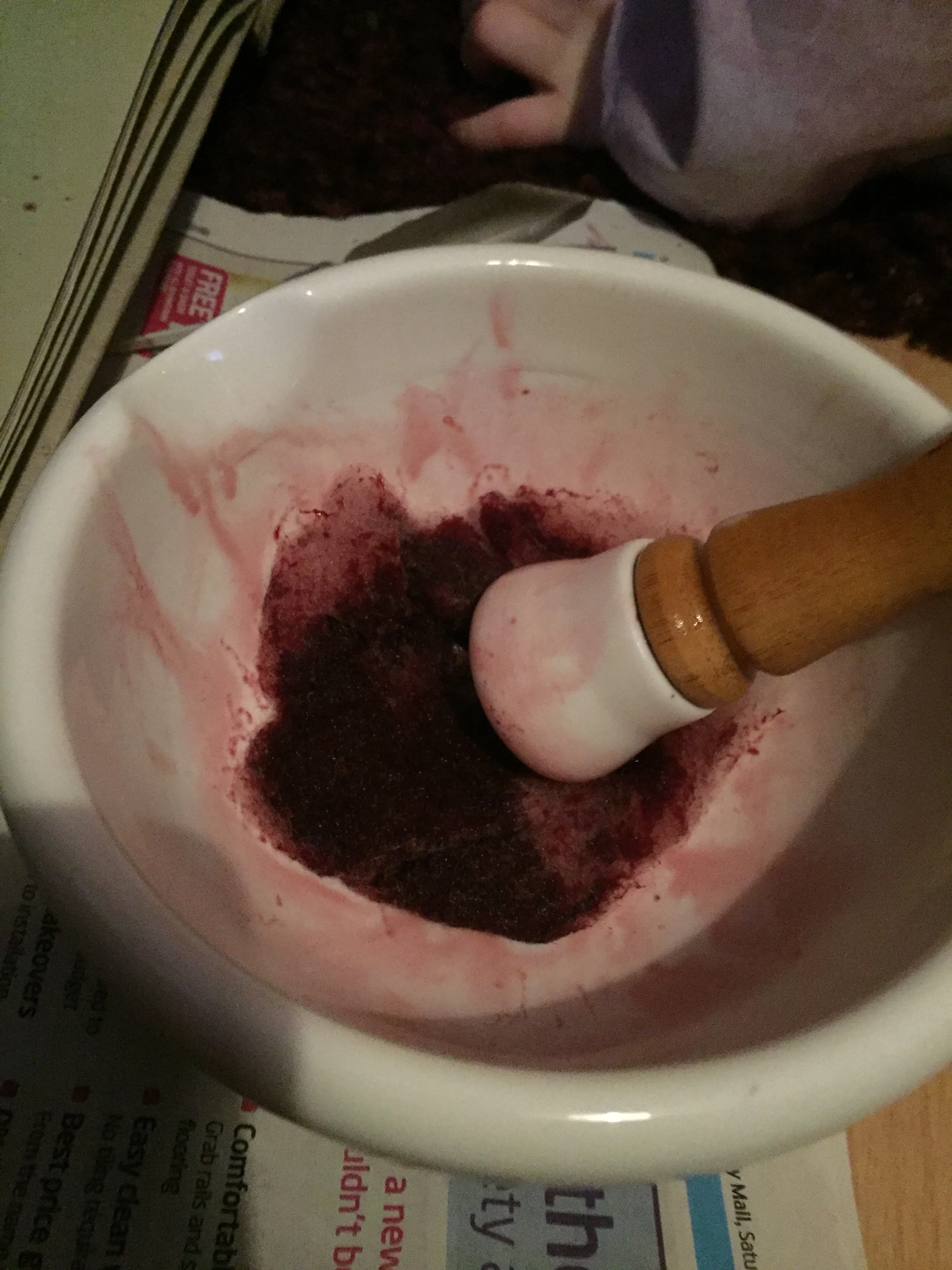
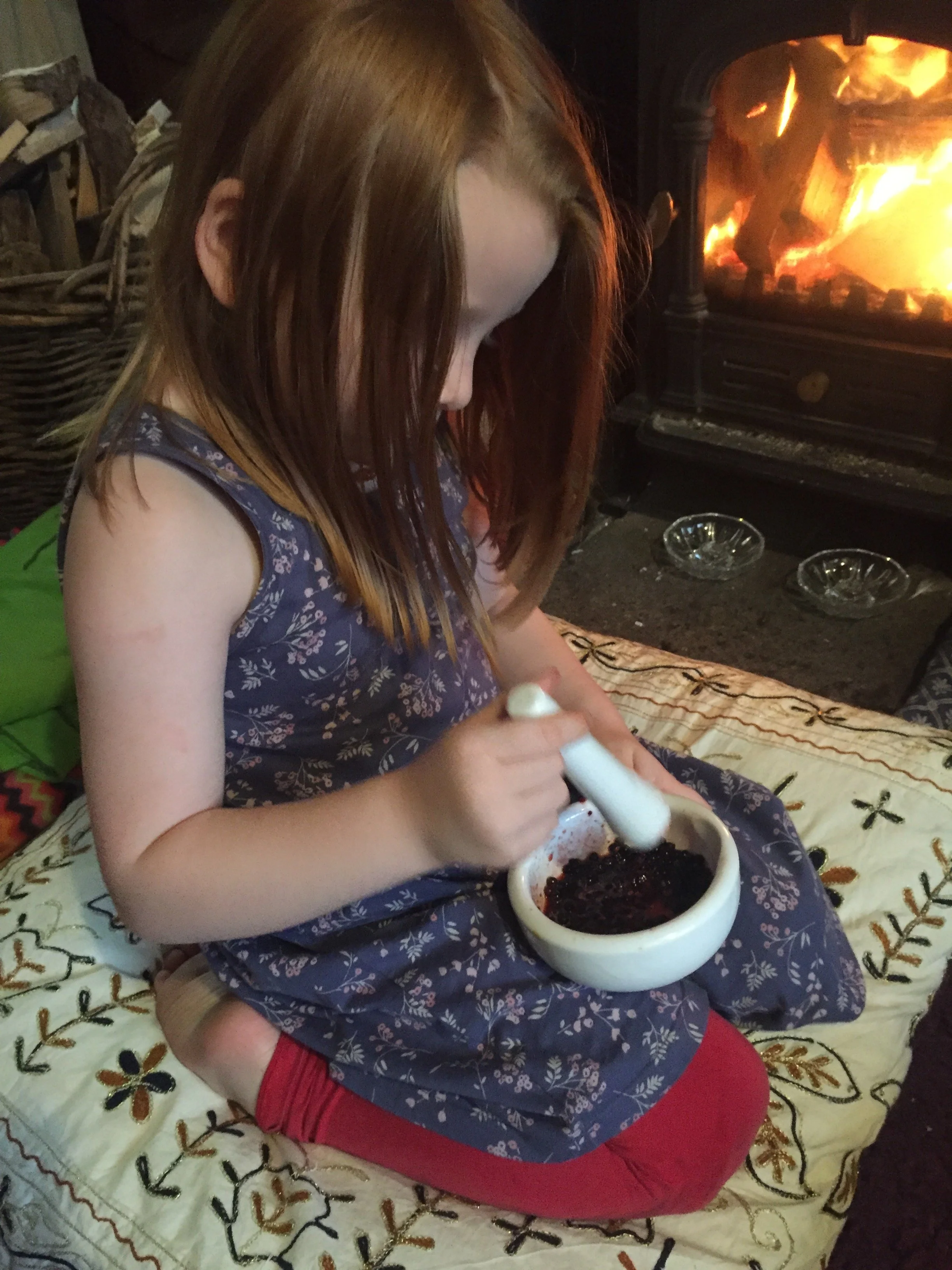
We began with fresh elderberries, removing the stalks before placing them into a mortar and pestle. We crushed them together until the berries released their deep, dark juice.
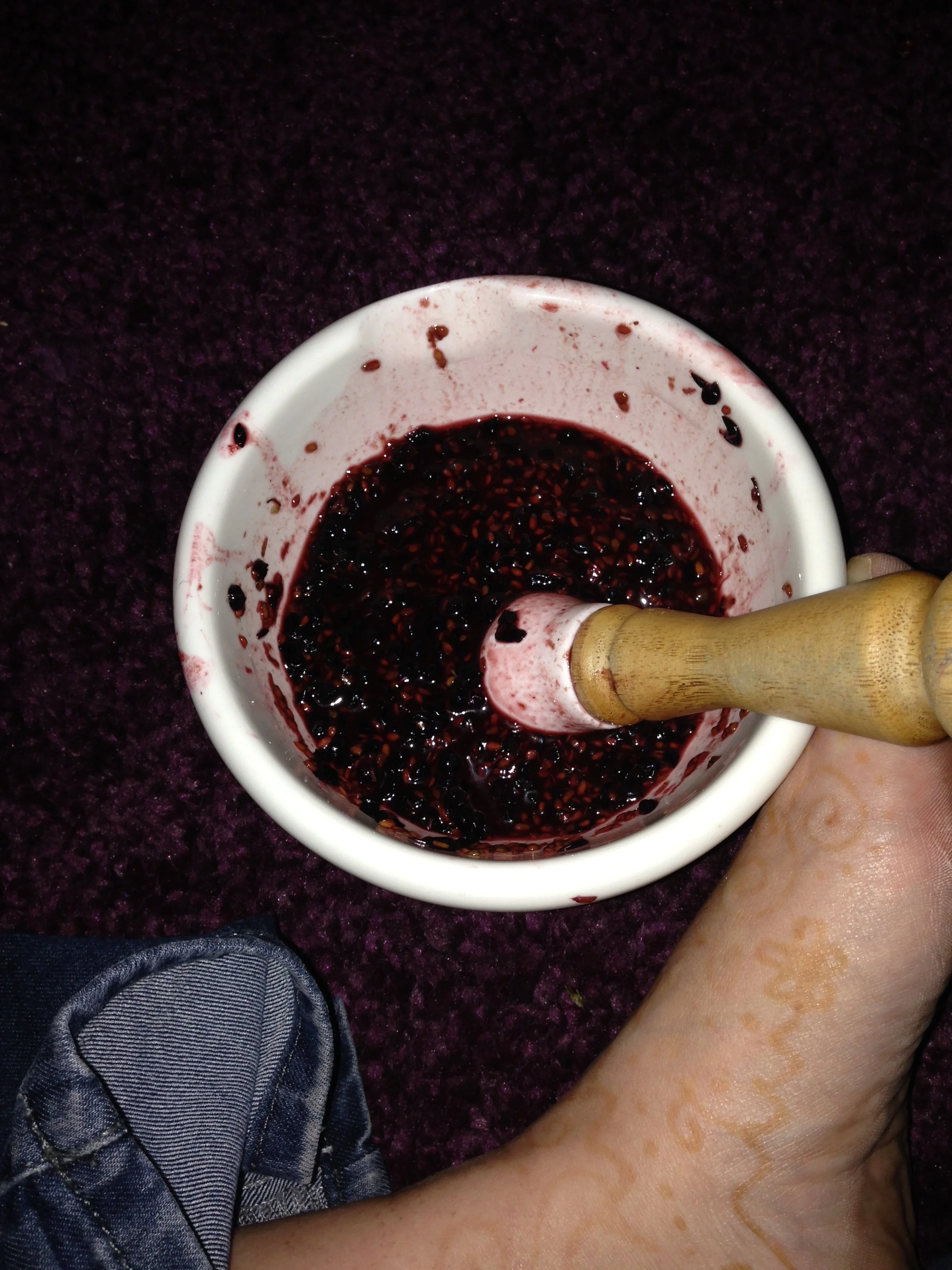
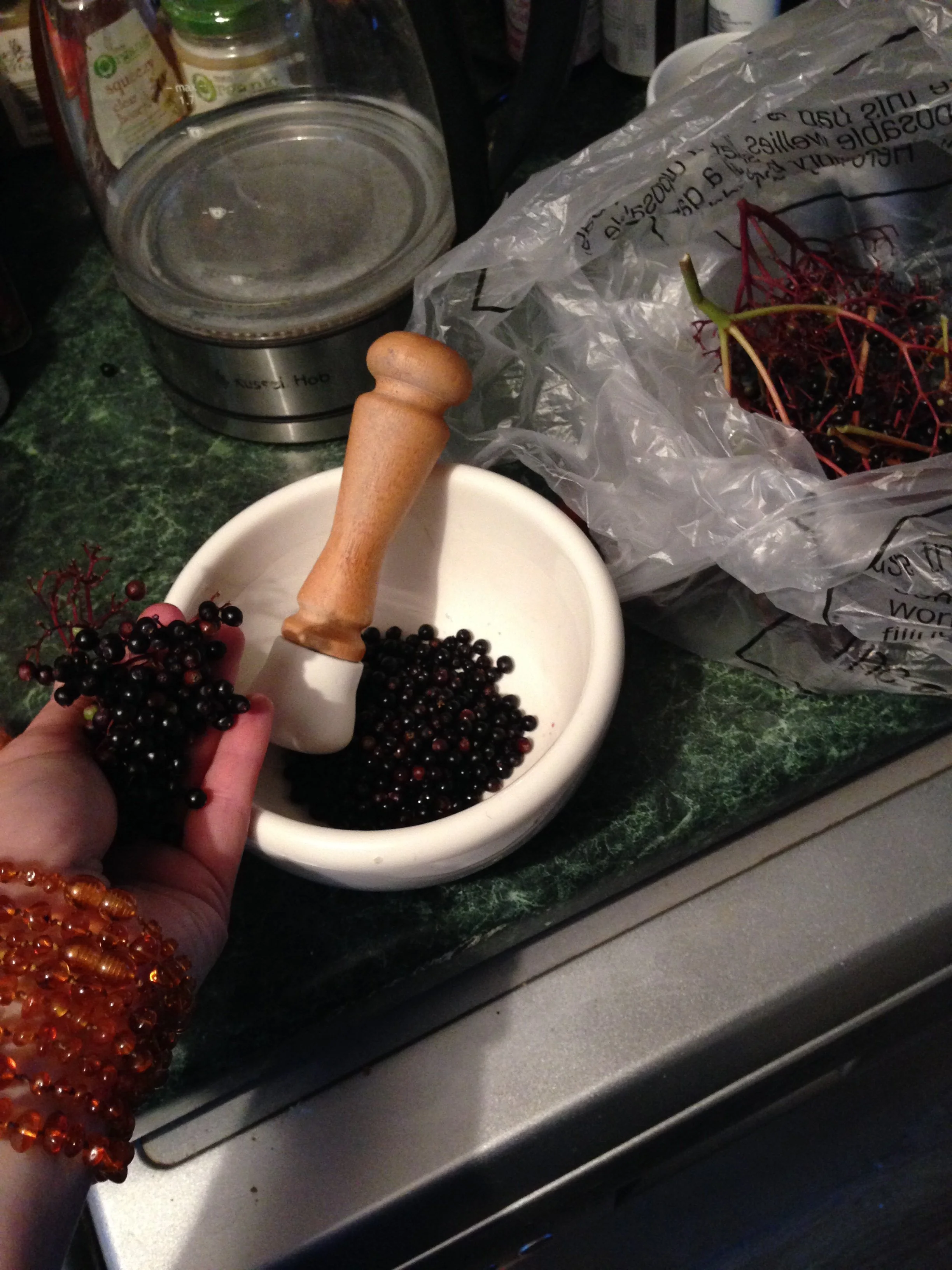
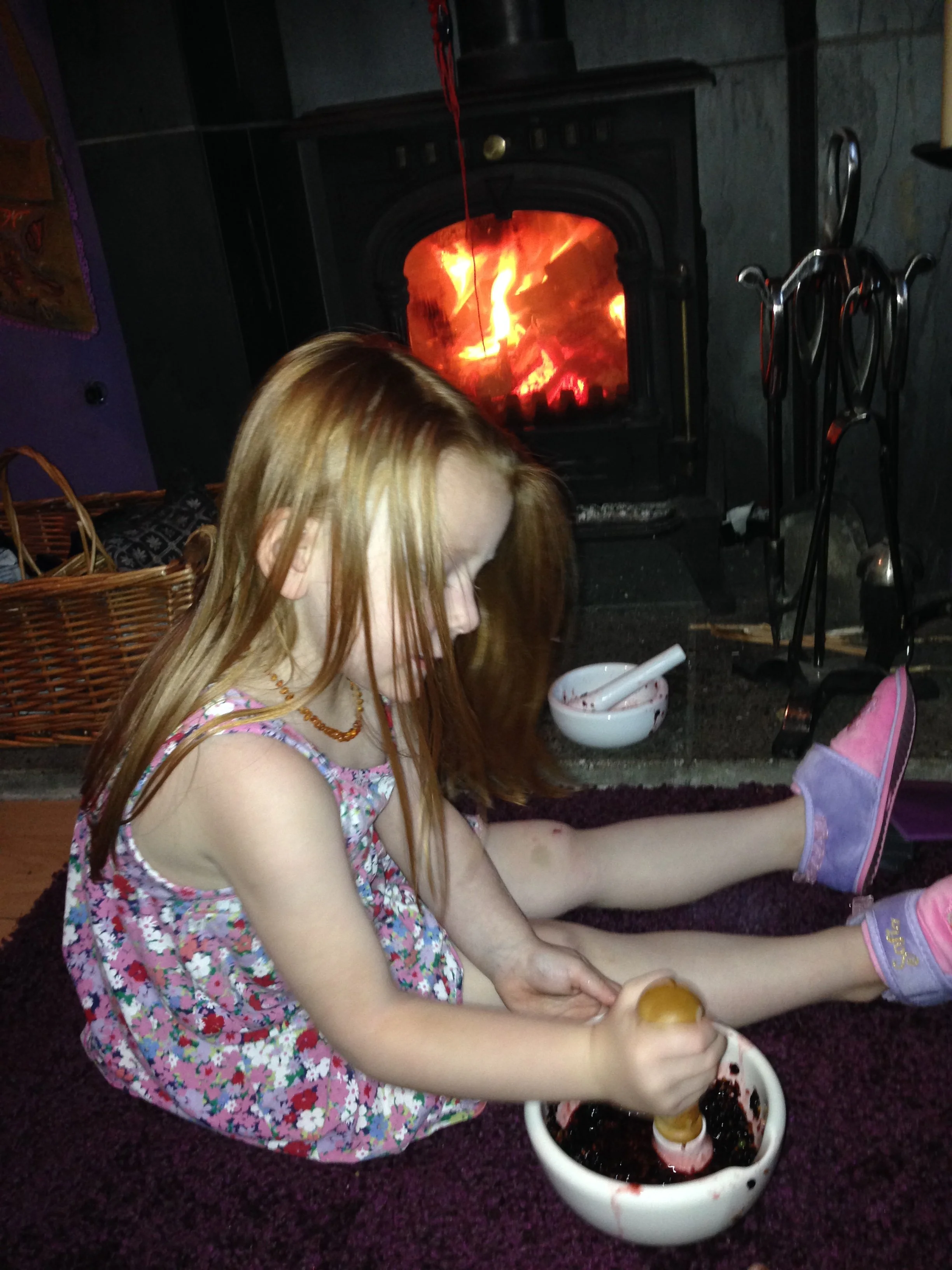
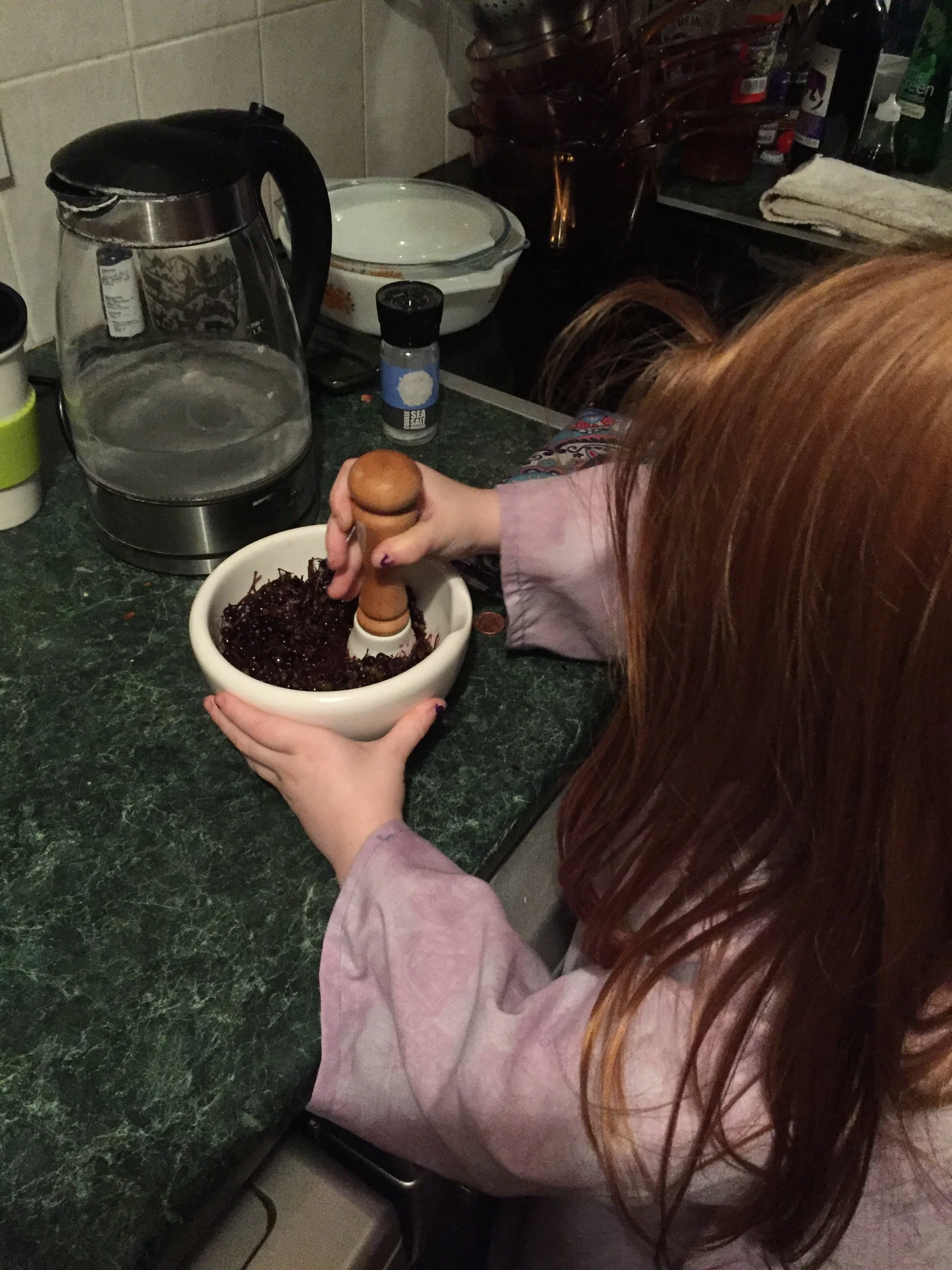
There is something very satisfying about this part.
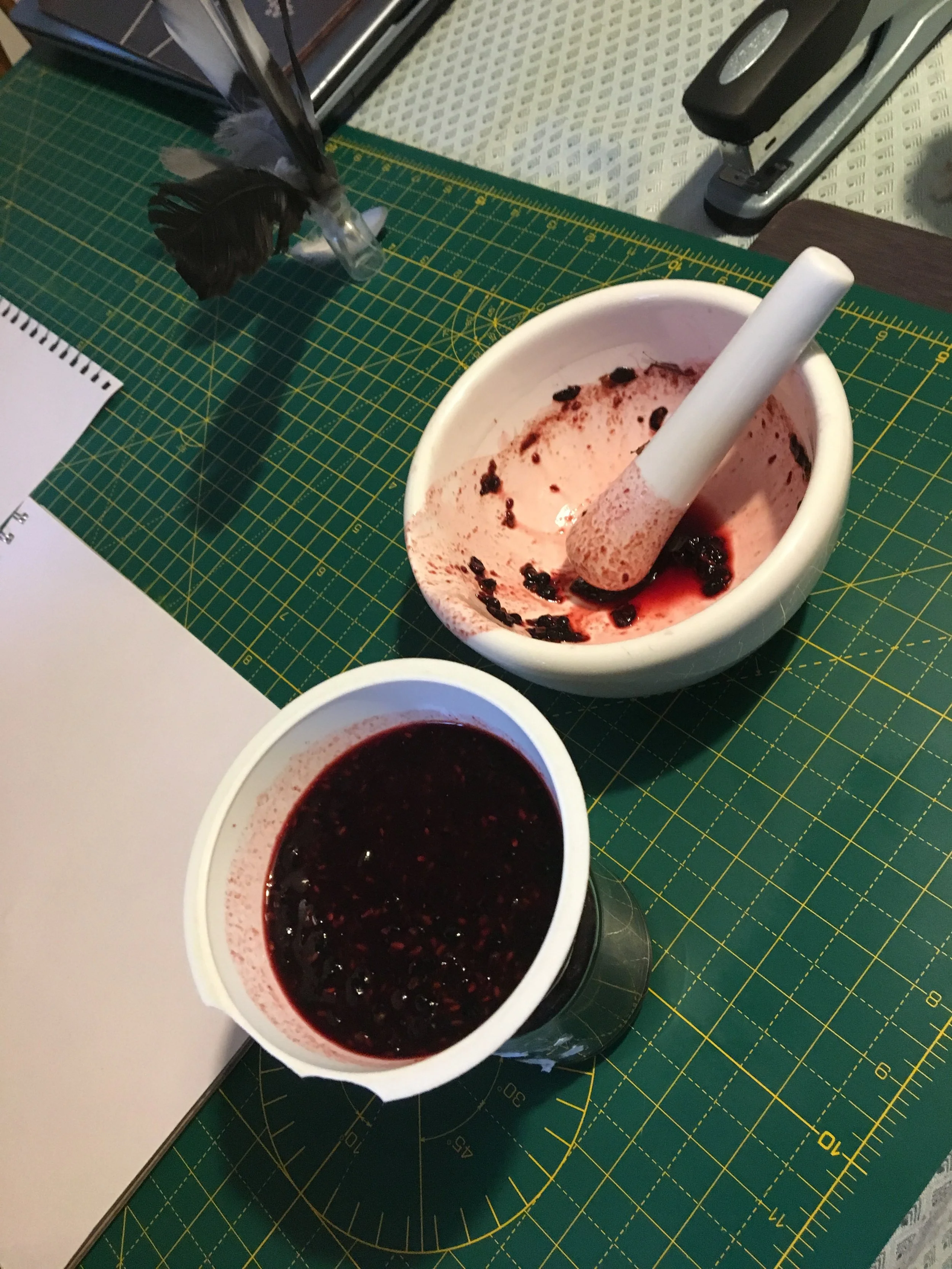
The berries begin as a beautiful purple-black mass, and gradually the colour deepens as the juice is released.
We then transferred the crushed berries to a saucepan, added just enough water to cover them, and gently heated them for around ten minutes.
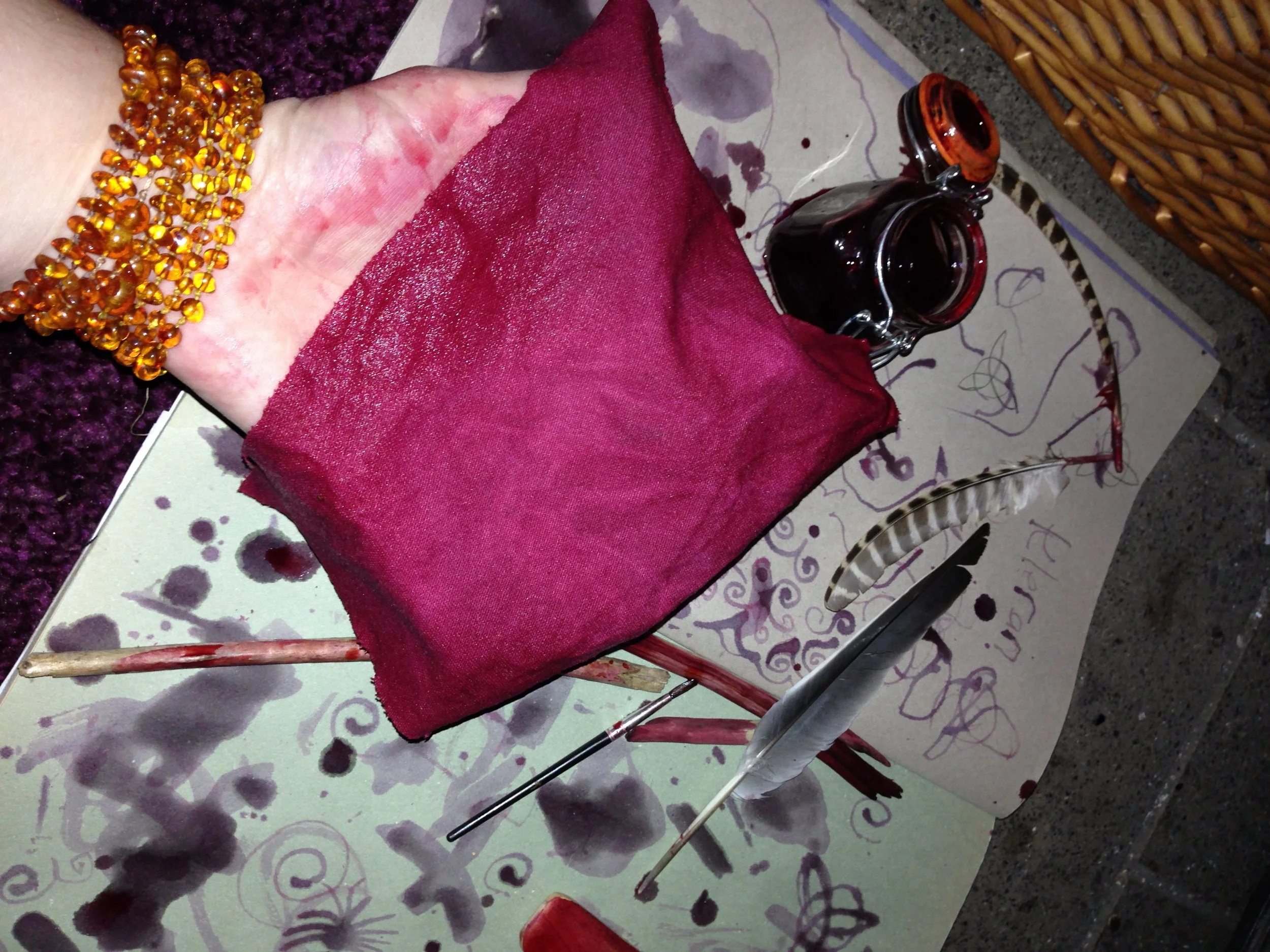
Once the colour had been released, we strained the mixture through muslin, taking care to wear gloves because the juice stains beautifully — and very easily!
We added a little white vinegar and salt before pouring the finished ink into small glass jars.
And then came the best part.
Experimenting.
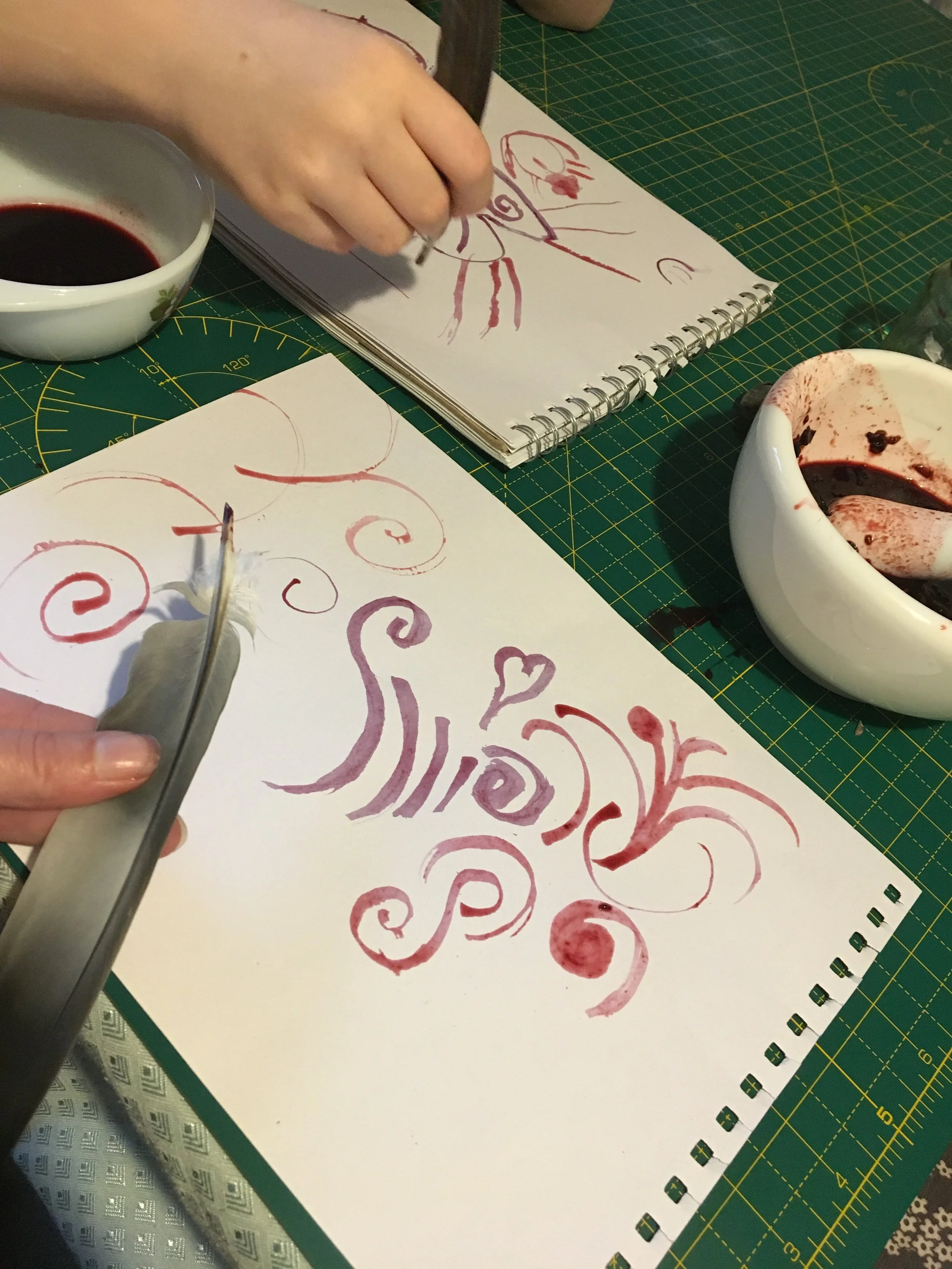
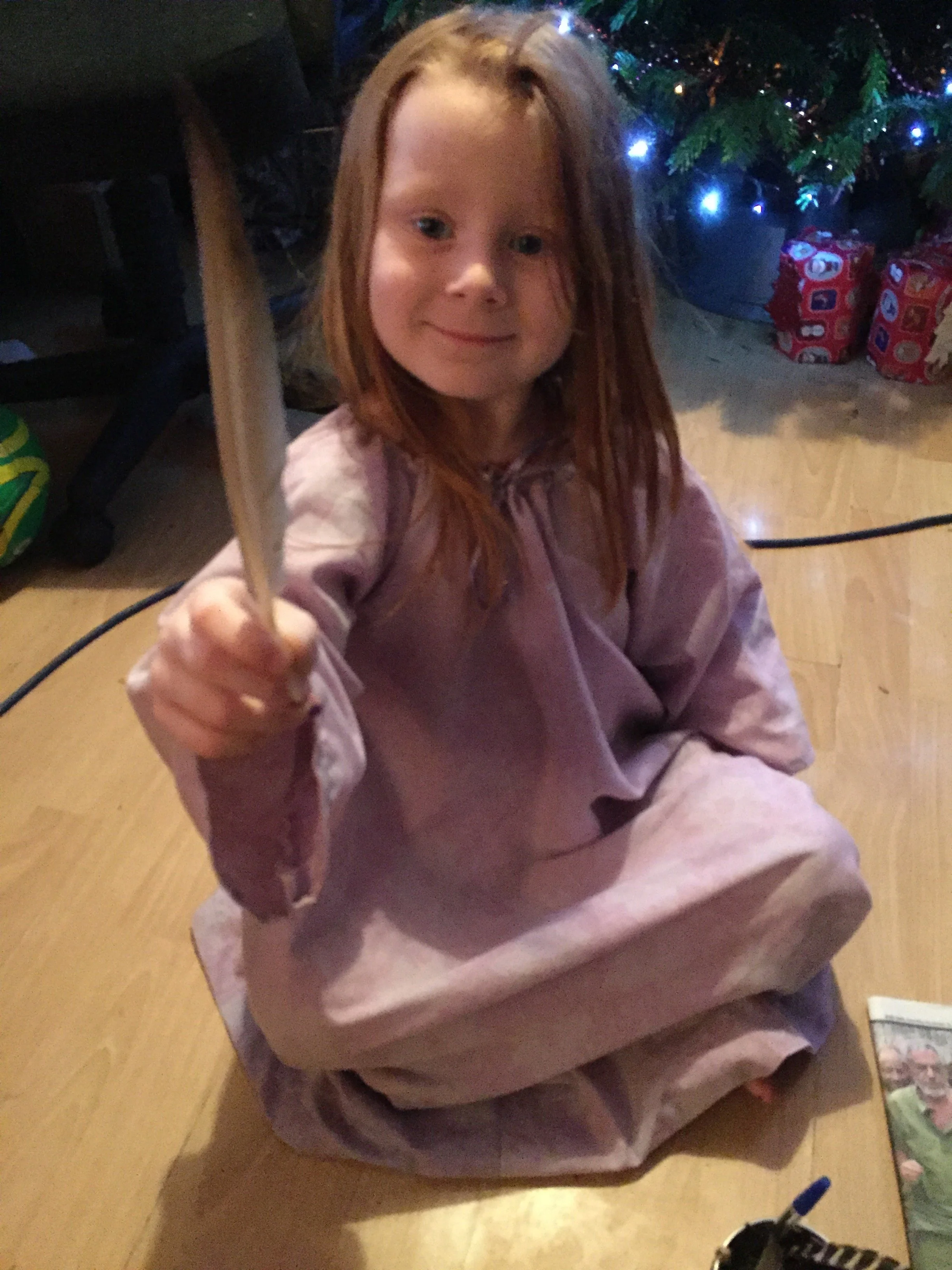
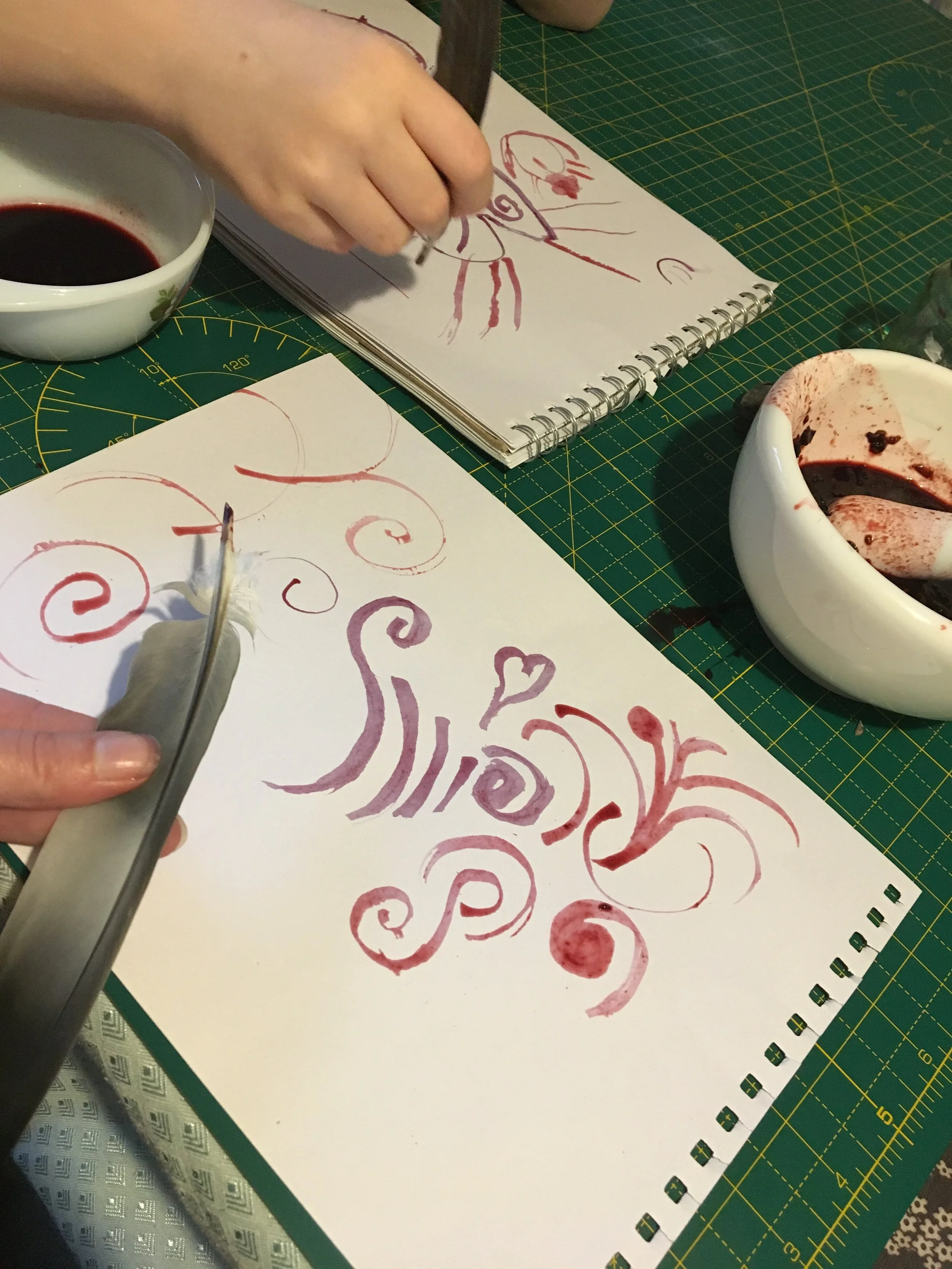
We gathered paper, brushes and some feathers we had foraged outside and turned them into our own little collection of quills.
There was no particular lesson to complete and no finished picture that needed to look a certain way.
We simply explored.
We painted.
We wrote.
We made marks and patterns.
We tried different feathers and different ways of holding them.
We watched how much ink each one picked up and how the marks changed as the ink began to dry.
And one of the loveliest surprises was the colour itself.
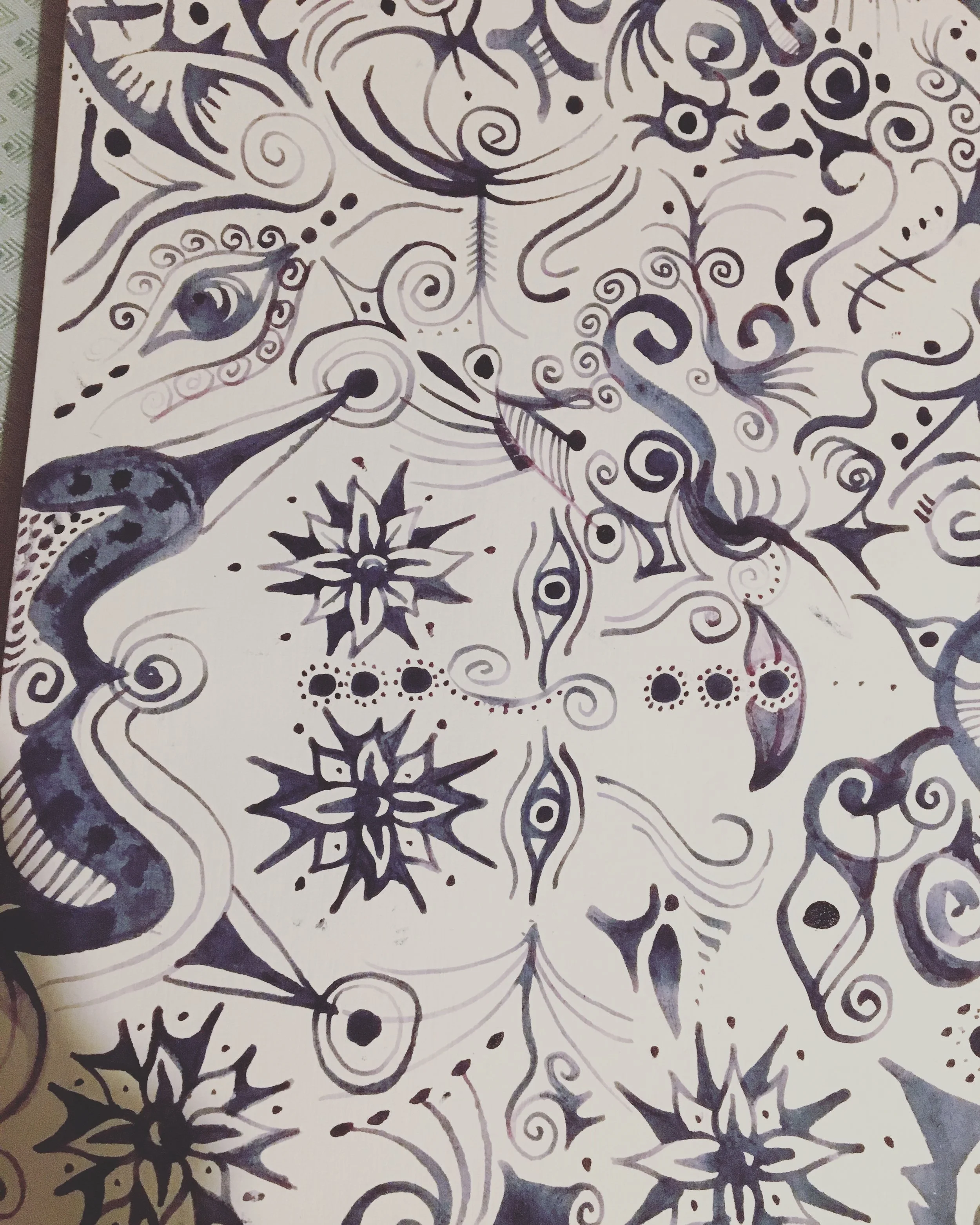
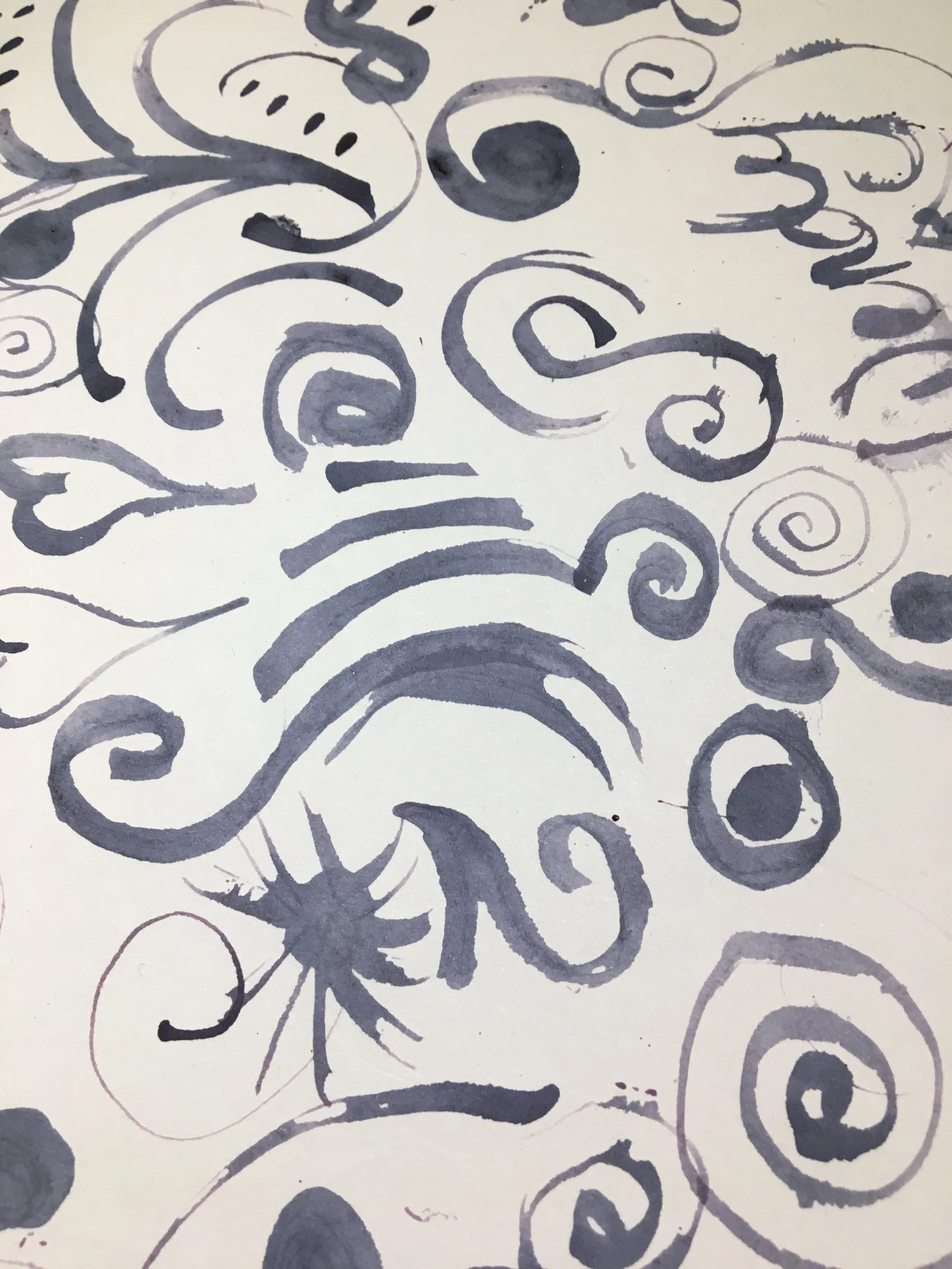
When the ink was freshly made, it was a rich, deep burgundy red. But as it dried, something rather wonderful happened.
The colour shifted towards indigo and blue.
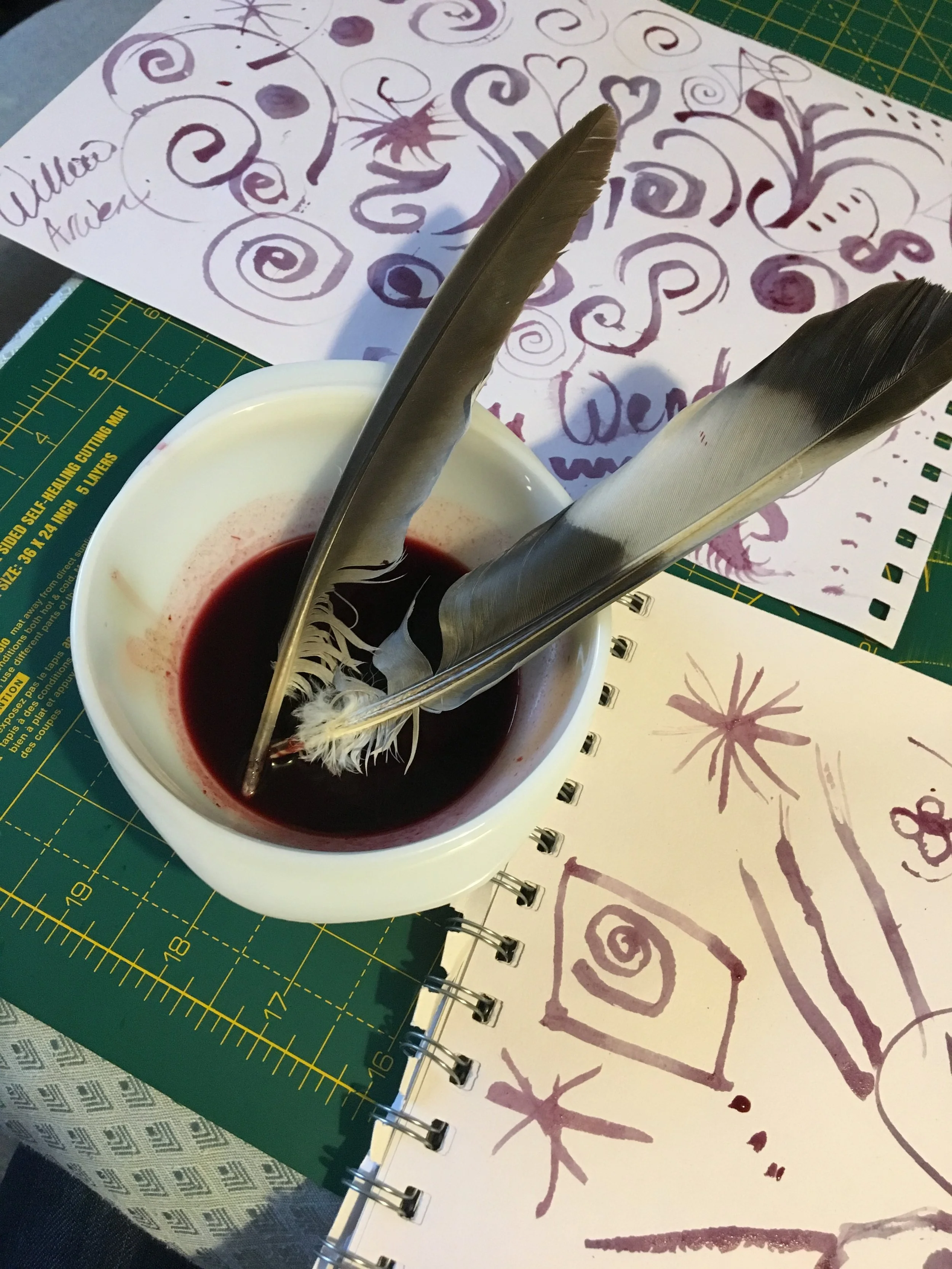
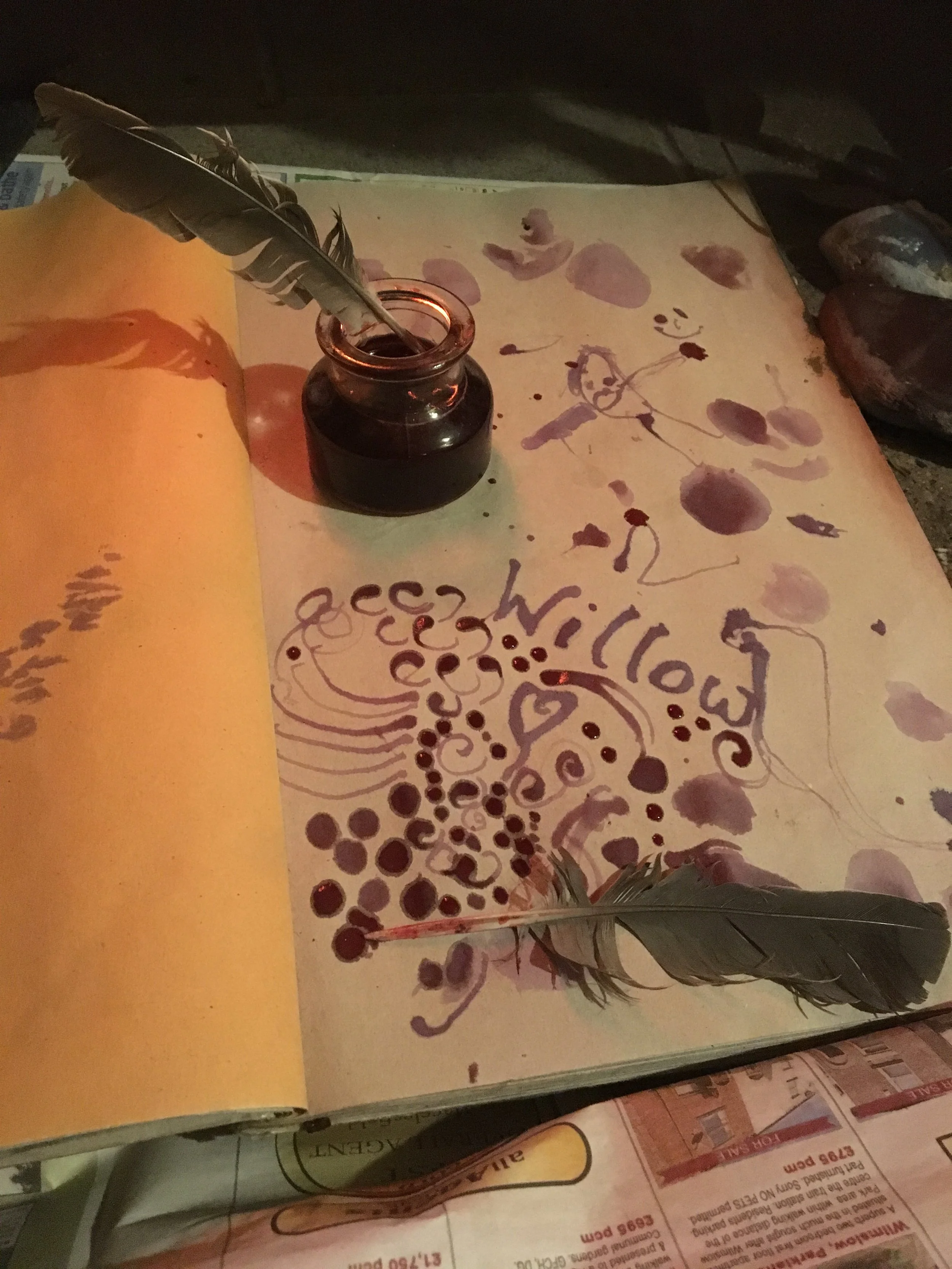
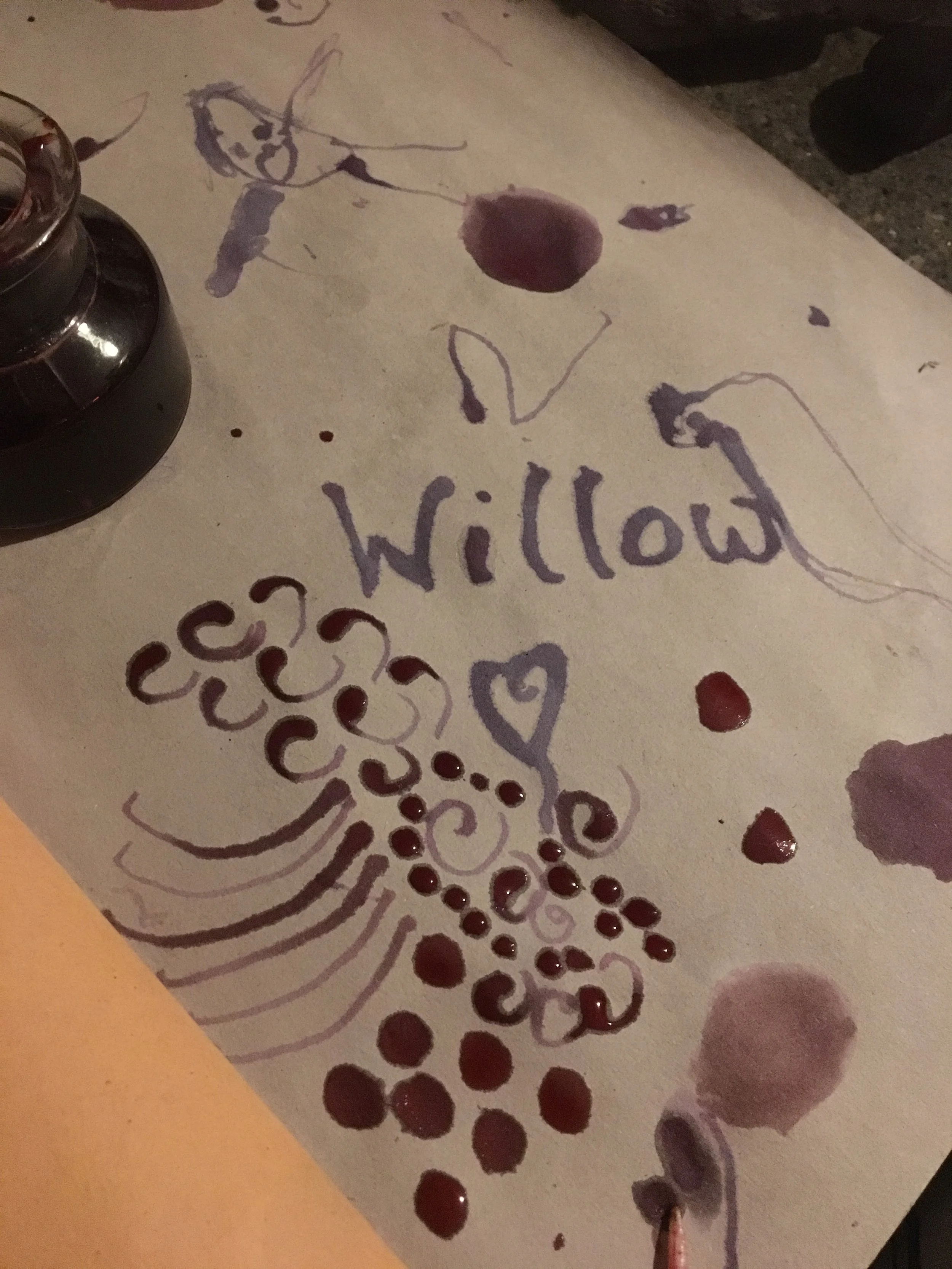
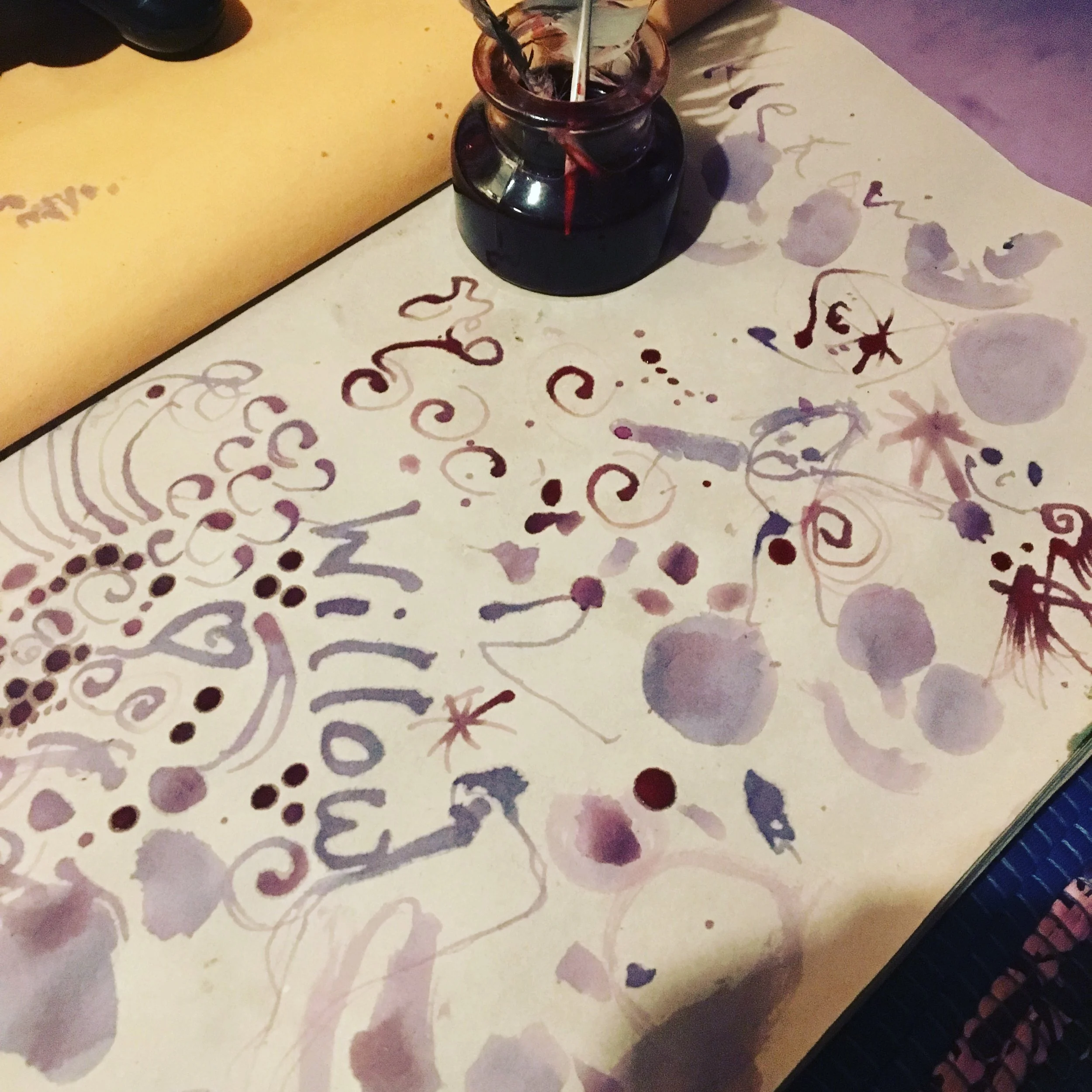
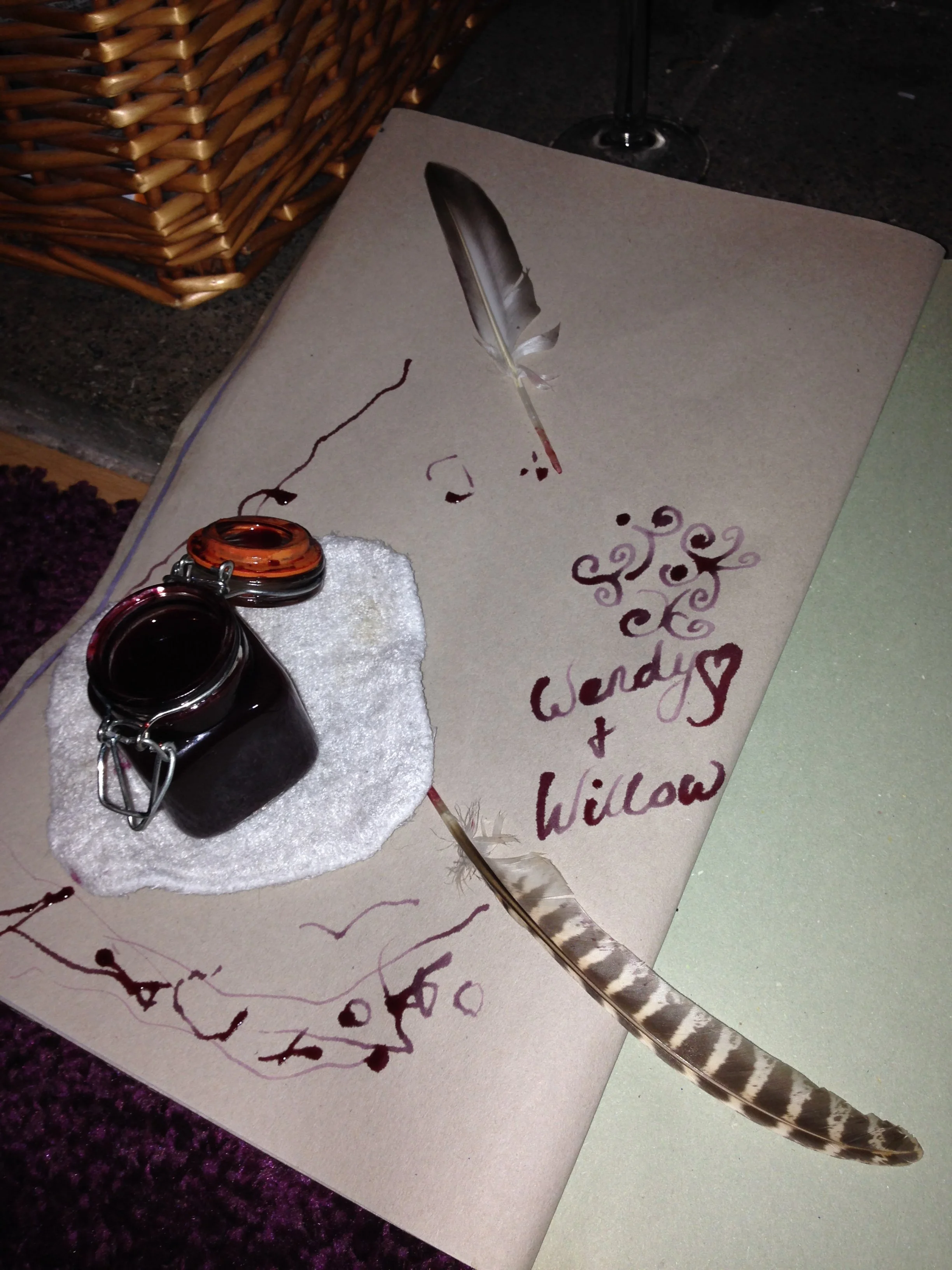
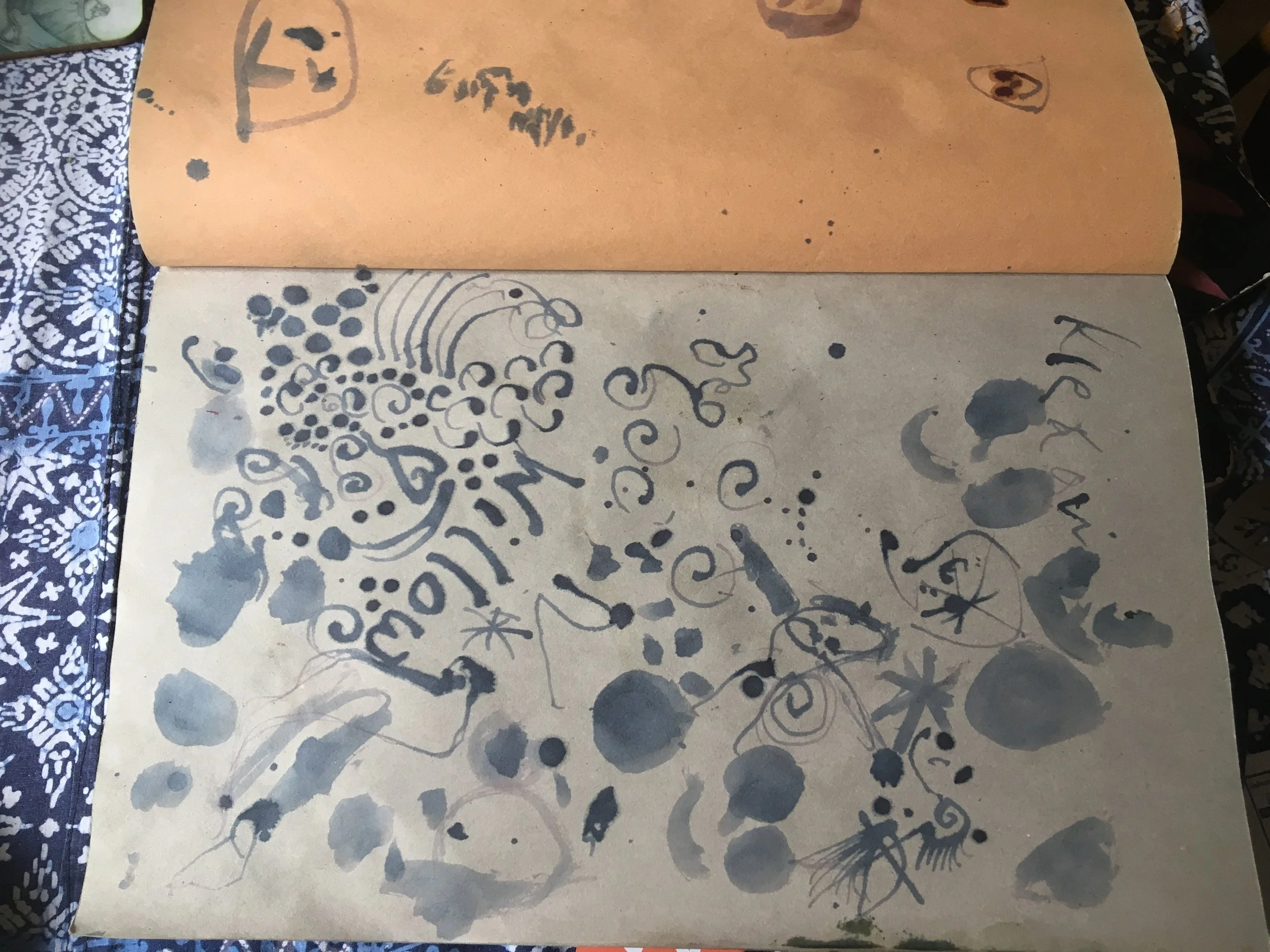
What looked one way in the jar became something quite different on the page.
We also experimented with using the elderberry ink on fabric, enjoying the unpredictability of the natural colour and seeing how it behaved on different materials.
This is one of the things I have always loved about working with natural materials with children.
There is room for surprise.
You can begin with an idea, but nature has a way of adding something of its own.
The finished colour isn't necessarily the colour you expected.
The feather doesn't make the same mark as a paintbrush.
The ink spreads differently on one piece of paper than another.
And that is where much of the learning happens.
Not in producing something perfect, but in noticing.
What happens if we add a little more water?
What happens when the ink dries?
Which feather makes the finest line?
What happens when we paint with our fingers?
How does the colour look on fabric?
These small experiments invite children to become observers, makers and participants in the world around them.
And there is something wonderfully old-fashioned about dipping a feather into a little pot of ink and making marks on paper.
For a while, the modern world seems very far away.
Just berries, feathers, paper, colour and curious hands.
Perhaps that is why I love these simple activities so much.
They don't need a complicated curriculum.
They don't need expensive materials.
They simply need a little time and the willingness to see what can be made from what is already around us.
A handful of berries becomes ink.
A fallen feather becomes a quill.
A piece of paper becomes a place for ideas to unfold.
And an ordinary afternoon becomes a childhood memory.
Sometimes the simplest materials give us the most beautiful invitations to create.
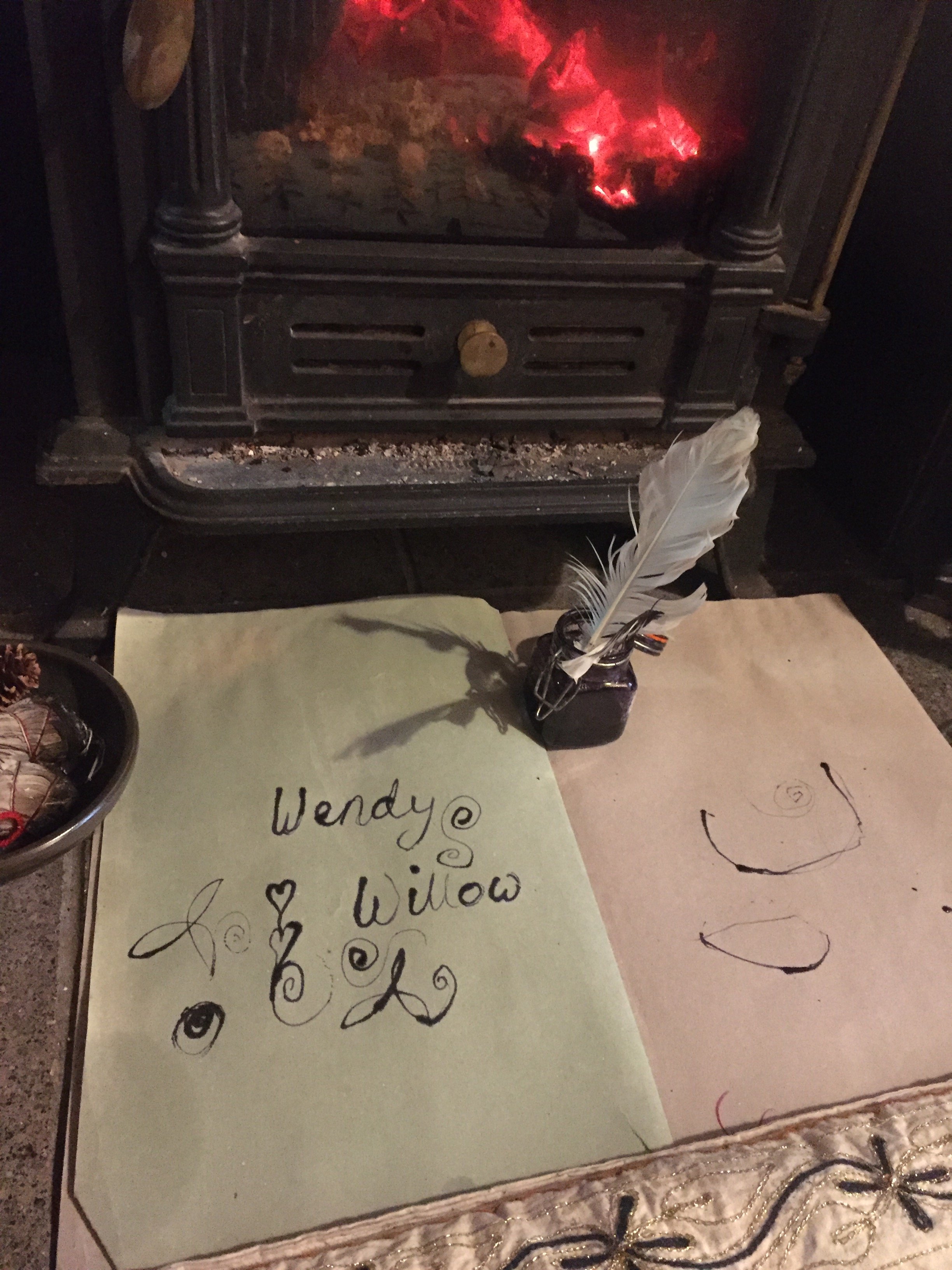
A simple elderberry ink experiment
For anyone who would like to try making their own, this is the simple method we used:
1–2 cups fresh elderberries, with the stalks removed
Approximately ¼ cup water, or just enough to cover the berries
1–2 tablespoons white vinegar
1 teaspoon salt
Crush the berries with a mortar and pestle, then transfer them to a saucepan with the water. Gently heat for around 10 minutes.
Strain through muslin into a clean container, taking care as the juice stains easily. Once strained, stir in the vinegar and salt and pour into clean glass jars.
Then comes the fun part — experiment and see what happens.
Try brushes, feathers, sticks or even your fingers. Use different papers and, if you wish, experiment with natural fabrics too.
The colours may surprise you.
And that is part of the joy.
As with any natural material, elderberries should not be eaten raw, and children should be supervised throughout the process. This is an art-making activity rather than a food preparation method, and the finished ink should be labelled and kept away from food.